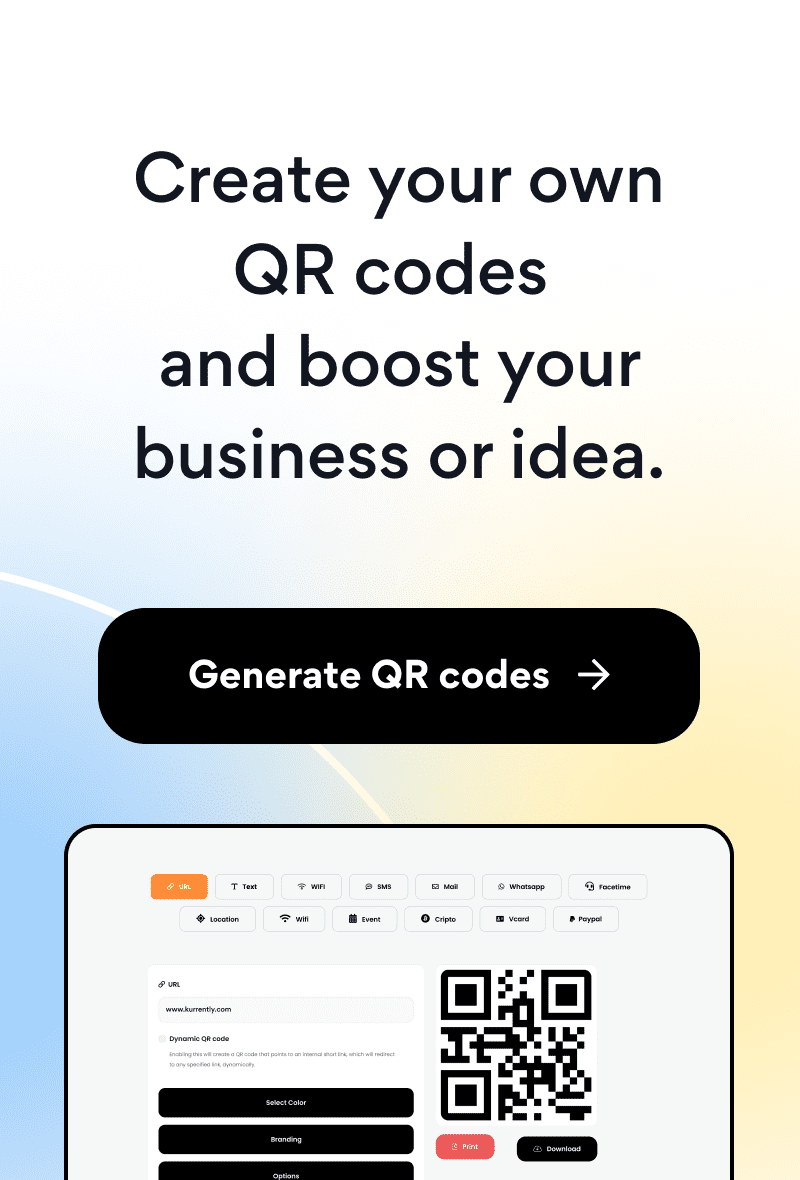

Transform your website’s URL into a scannable sensation with QR codes. Rather than manually typing in a web address, users can simply wave their smartphone over the code to access your site. With QR Code Generator, you can personalize your creation by adding your brand’s colors and logo – making it visually appealing and stand-out strong. Plus, the process is a breeze:
Voila, your URL is transformed into a scan-tastic success that boosts your user experience and brand promotion!
QR Codes 101: What Are They and How Do They Work?
QR codes, short for Quick Response codes, are two-dimensional barcodes that can be scanned with a smartphone camera or QR code reader to access digital content. They were first invented in 1994 by a Japanese company called Denso Wave, and since then have become increasingly popular for marketing and promotional purposes.
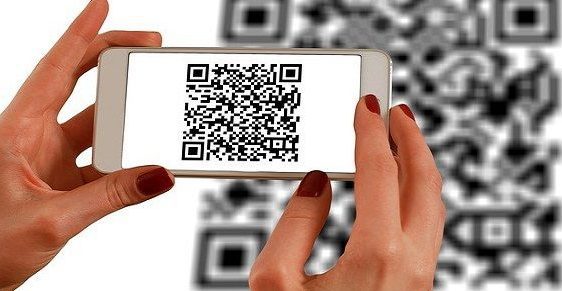
To scan a QR code, the user needs to open up their phone’s camera app and point it at the code. The camera should then recognize the code and pop up a notification asking if the user wants to open the link associated with the code. QR codes can be used to link to websites, online documents, social media profiles, and even to make payments.
The Relationship Between URLs and QR Codes: Can a URL be Turned into a QR code?
Yes, a URL can be turned into a QR code. In fact, this is one of the most common uses for QR codes. To create a QR code for your website’s URL, simply copy the URL and paste it into a QR code generator. You can then customize the QR code by adding color and a logo or selecting from pre-made designs.
By using QR codes to promote your website, users can easily access your site without having to remember a complicated URL or perform a Google search. This is particularly helpful for mobile users who may be accessing your site on-the-go.
How to Create a Customized QR Code for Your Website
To create a customized QR code for your website, follow these steps:
Step 1: Copy your website’s URL
Step 2: Go to a QR code generator website, such as QR Code Monkey, QR Code Generator, or Beaconstac
Step 3: Paste your URL into the generator
Step 4: Customize your QR code by adding color and a logo or selecting from pre-made designs
Step 5: Download your QR code and use it for marketing and promotional purposes
Remember to test your QR code by scanning it with your smartphone or QR code reader to ensure that it works properly.
What You Need to Know About QR Code Generators
QR code generators are online tools that allow you to create QR codes for free. Some typical features you can expect in QR code generators include the ability to add color, logos and branding, as well as selecting from pre-made designs.
It’s important to note that not all QR code generators are created equal. Some may display unwelcome ads, limit the number of scans, or even contain malware. And while most QR code generators are free, some may offer premium features for a fee.
Before using a QR code generator, make sure to research the tool and read reviews from other users to ensure that it is reliable and safe.
The Benefits of Using QR Codes for Marketing and Promotion
QR codes offer several benefits for marketing and promotion. Here are just a few:
1. Convenience: QR codes provide a convenient way for customers to access digital content with their smartphones, without having to manually enter in a URL or perform a search.
2. Trackability: QR codes can be used to track the success of your marketing campaigns. By using a unique QR code for each campaign, you can see how many people are scanning the code and accessing your content.
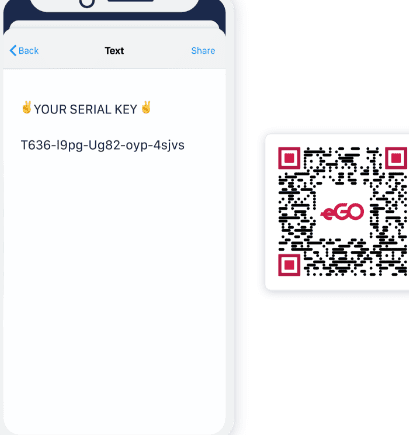
3. Branding: QR codes can be customized with your business’s logo and branding, making them a powerful tool for increasing brand awareness.
4. Versatility: QR codes can be used in a variety of marketing materials, including flyers, business cards, posters and product packaging.
How to Incorporate QR Codes into Your Marketing Campaigns
QR codes are a versatile tool that can be used in a variety of marketing campaigns. Here are a few ideas for how to incorporate QR codes into your marketing efforts:
1. Product packaging: Include a QR code on your product packaging that links to additional product information or a how-to video.
2. Business cards: Create a custom QR code for your business card that links to your website or contact information.
3. Print advertising: Include a QR code in your print ads that links to a landing page or special offer.
4. Event promotions: Use QR codes to promote your upcoming events by including them on flyers or invitations.
Tips for Maximizing the Effectiveness of Your QR Codes
To get the most out of your QR codes, consider these tips:
1. Test your codes: Test your QR codes with different phones and readers to ensure that they work properly.
2. Keep it simple: Avoid using overly complicated designs or URLs, as they can be difficult to scan.
3. Offer value: Make sure that the content your QR code links to is valuable and relevant to your target audience.
4. Include a call-to-action: Encourage users to scan your QR codes by including a call-to-action, such as “Scan now to receive a special offer.”
QR Code Security: Best Practices for Keeping Your QR Codes Safe
QR codes can pose a security risk if they lead to malicious websites or scams. To protect yourself and your customers, follow these best practices:
1. Check the content: Before using a QR code, check the content that it leads to to ensure that it is legitimate and safe.
2. Use a reputable generator: Only use reputable QR code generators to ensure that your code is secure and free of malware.
3. Simplify the link: Use a link shortener, such as Bitly or TinyURL, to simplify the link and hide any potentially suspicious characters.
By following these tips, you can ensure that your QR codes are a safe and effective tool for marketing and promotion.