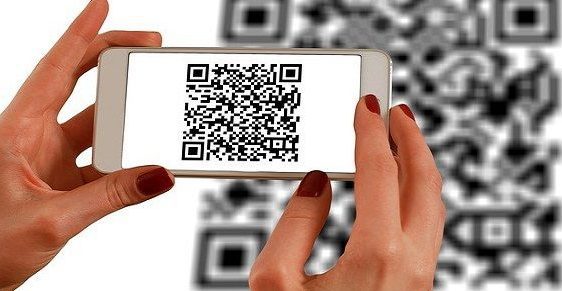

Did you know that you might have an inbuilt QR scanner in your phone’s camera app? That’s right! For Android 8 and later versions, scanning QR codes is a breeze as the Camera app already has a QR code reader. Here are some perks of having this amazing feature in your phone’s camera app:
Having a QR scanner in your phone’s camera app saves time, promotes security, and makes scanning QR codes effortless. So, next time you need to scan a QR code, don’t forget to check your phone’s camera app and see if the QR scanner is already there!
The basics of QR codes
QR (short for Quick Response) codes are two-dimensional barcodes that were first invented in Japan in the mid-1990s. They consist of a square pattern of black and white modules (or “pixels”) arranged on a white background. QR codes are used to encode information such as URLs, contact information, and even payment information.
The information encoded in a QR code can be read by scanning it with a smartphone camera. Once a QR code has been scanned, this information can be decoded and used in various ways, depending on what the code contains. These codes can be seen on billboards, posters, product packaging, and even in TV shows and movies.
QR code scanners vs. integrated readers
In the past, if you wanted to scan a QR code, you needed to download a separate app designed specifically for that purpose. These apps would use your phone’s camera to scan the QR code and decode its information. Some of the most popular QR code scanner apps include QR Code Reader by Scan, QR Reader for Android, and i-nigma QR Code Scanner.
However, many modern smartphones now come with an integrated QR reader, which is built directly into the phone’s camera app. This means that you no longer need to download a separate app to scan a QR code – you can simply use your phone’s built-in camera app to do so.
The evolution of QR scanning in smartphones
The first smartphones to include a built-in QR reader were released around 2011-2012. However, these early implementations were often clunky and unreliable, and many users found it easier to simply use a dedicated QR scanner app instead.
Over time, however, smartphone manufacturers began to improve the accuracy and speed of their built-in QR readers. By the time of the release of Android 8 in 2017, many users found that their phone’s integrated QR reader was just as good (if not better) than many of the third-party scanner apps available at the time.
Android 8: the turning point for QR readers
Android 8 (also known as Oreo) was a major turning point for smartphone QR readers. This operating system introduced a much-improved version of Google’s Camera app, which included a QR code scanner built directly into the app.
This new feature made it incredibly easy for users to scan QR codes without needing to download a separate app. All they had to do was open the camera app, point it at the QR code, and wait for the notification to pop up.
How to use the Camera app as a QR scanner
Using the Camera app as a QR scanner is incredibly easy. Here’s how to do it:
- Open the Camera app.
- Point your camera at the QR code.
- Wait for the notification to pop up.
- Tap the notification to open the link, add a contact, or perform any other action associated with the QR code.
Understanding the benefits of integrated QR readers
There are several significant benefits to having an integrated QR reader built directly into your smartphone’s camera app. These include:
- No need to download a separate app:
- Improved accuracy and speed:
- Less clutter on your phone:
With an integrated QR reader, you can scan QR codes directly from your phone’s camera app, without needing to download a separate app.
In many cases, integrated QR readers are faster and more accurate than third-party scanner apps, thanks to improvements in smartphone camera technology.
By using your phone’s built-in QR reader, you can avoid cluttering up your home screen with yet another app.
QR utilization in our daily life
QR codes have become increasingly prevalent in our daily lives, and can be found in a wide range of different settings. Some common use cases for QR codes include:
- Product packaging:
- Advertising:
- Event ticketing:
- Payment:
QR codes can be used to provide additional information about a product, such as reviews, nutritional information, or links to related products.
QR codes are often used in advertising to provide a quick and easy way for consumers to learn more about a product or service.
QR codes can be used as a digital alternative to physical tickets, allowing people to easily and securely gain entry to events.
QR codes can be used as a quick and easy way to make payments, particularly in countries where cashless payment systems are becoming increasingly popular.
In conclusion, if you have an Android phone running Android 8 or later, you should have a built-in QR reader integrated into your camera app. This makes it incredibly easy to scan QR codes without needing to download a separate app. And with the increasing prevalence of QR codes in our daily lives, having this functionality built directly into your smartphone can be a real time-saver.